

No Promises

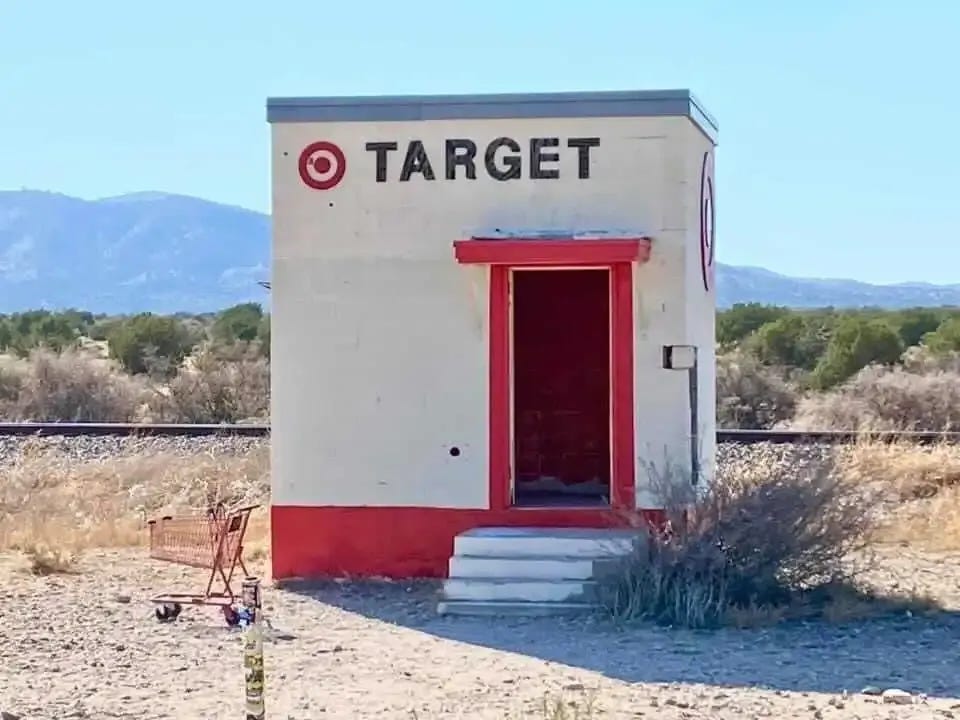
There’s a loneliness you run from and a loneliness you drive toward, and West Texas has the second kind in quantities that would make lesser men nervous. I went looking to get lost, which is harder than it sounds in a world that put a tracking device in your pocket. You can’t wander off the map anymore. The map got everywhere before you did. There ain’t much difference between a cell phone signal and a leash. By then I was ready to slip both. But you can damned sure visit the places the map forgot, and West Texas is full of themburned them right off the tourist guides and freeway turnoffs. The local Chamber of Commerce consists of three old boys sitting on a bench outside the pharmacy, and their official welcoming strategy is to hope you don’t stop and take up their oxygen.
I found what I was looking for, though, which was nothing.
I’ve always found that a crowded room is the worst place on earth to try and find yourself. People carry too many opinions, and after a while, they just drown out the truth. You need absolute nothingness to clear out the racket. That’s why I love empty places like West Texas. There are about four people per square mile out here, and not a single one of them cares who you are or where you’re going. It’s a beautiful kind of indifference. It lets a man finally hear himself think, which is usually a terrifying experience for someone with my track record, but by the time you realize that, you’re three hours deep into the desert with nothing on the dial but static and a preacher who sounds like he’s shouting from the bottom of a well.
The towns seemed ok with this. They’d been left alone long enough to stop pretending. Dust on every door, paint burned off by a sun with no interest in preservation. The ground red and dry, the heat rising in waves, mesquite growing where it could, hawks circling with the patience of something that had long since given up on urgency. Population four hundred and holding, which in West Texas speak means the dying is slower and everybody just figures that’s the way it is. Civilization calls this emptiness because we arrive full of ourselves and have a terrible habit of mistaking silence for absence.
The motel had stopped expecting visitors sometime around the first moon landing and never really recovered from the disappointment, which is a feeling I understand . Doors that suggested turquoise more than actual pigment. A neon sign out front blinking without conviction. Inside it smelled like cedar losing a bitter argument with mildew, and a swamp cooler rattled in the corner doing what it could, which wasn’t much, which was also what it asked of you, and I found that fair.
At night I sat outside in a plastic chair with a cold beer and the freedom that comes from being somewhere nobody knows you and nobody’s working on trying to. The insects did their thing. The occasional truck rumbled past, steady and indifferent, and out there indifference may be secondary only to oil in natural abundance.
One night I sat on the edge of the motel pool with my boots off and my feet in water that was barely cooler than the air. The pool filter pump hacked and rattled like an old man, and every time it did the surface trembled and my reflection broke apart and drifted back together. Nobody knew where I was. Nobody needed anything from me. No calls, no obligations, nothing requiring my immediate attention. Just heat and a dying pool pump and the silence. The strangest part wasn’t the loneliness. It was the relief. I sat there until I understood something I hadn’t before. That a man can disappear without necessarily being lost. That sometimes disappearing is exactly the right thing to do and the only people who’d argue with that are the ones who’ve never needed to.
The food was good in the way that in only can when nobody involved gives a damn about the experience. The waitress refilled my drink without asking, which felt less like great service and more a threat. I’ve eaten in restaurants where a man explained the menu to me in great detail. I tipped him twenty percent and left hungry. The woman in Pecos handed me a plate the size of a hubcap and never said a damned word, and I think about that meal more than most of the sermons I sat through as a boy, and frankly, it did a whole lot more for my soul.
and something without a word for it that keeps pulling you down the road anyway, chasing a horizon so flat it makes a pool table look like the Blue Ridge Mountains. A man who needs to be wanted everywhere has never learned the dignity of being irrelevant, and out there irrelevance was the offer and I took it gladly. I’m not sure that taste is a flavor so much as an accusation the world makes against everything you thought you needed. Everything out there is dirtyIt becomes the paint. It becomes the skin. You realize after a hundred miles that you aren’t looking at a landscape covered in dust, you’re watching a slow-motion ambush. The highway is being eaten from the edges. Up ahead, the yellow lines are drowning under a tide of silt, and every mile you cover feels less like driving and more like trespassing on a burial. I looked at those storefronts and genuinely could not tell you whether the buildings were holding up the dirt or the dirt was holding up the buildings. It’s the kind of town where the only thing holding a roof over your head is a century’s worth of grime and the sheer laziness of gravity.
In the mornings I walked while the sun was stifling before it fully rose and shade offered little in way of assistance. Wildflowers pushed through cracks in the broken edges of blacktop, yellow and stubborn purple. The air smelled of mesquite smoke and warm dust and in that heat it was easy to believe you were getting closer to whatever you’d been driving toward. Or further from whatever you’d been driving away from, which at a certain age is the same trip.
When I left I drove with the windows down, the air hot and full of itself, and those towns came with me the way they always do. They work into your skin and resurface on other nights when the world gets too loud and too pleased with itself. They remind you there’s more to a life than noise and proximity to other people’s ambitions. I keep going back because those places don’t ask for anything you haven’t already got, and they don’t perform, and they don’t pretend, and on certain days that is the only thing in your life that isn’t doing all three.
The road doesn’t care where you’ve been. It just points onward.
And out there, that’s religion.
Years ago, I lived in an old silver mining town in Nevada that could give West Texas a run for its money in the loneliness category. Except for the town’s people, it was the most amazing experience to look at the stars at night in an open sky that I had ever experienced. The silence was not as heavy as I expected, since I love the noise of the city, but comforting, like coming home for a rest. Familiar, yet unfamiliar at the same time. Thank you for the reminder.
William Least Heat Moon wrote a book of essays called Blue Highways. "West Texas" describes three places which I used to have my students read it to understand the power of description organized by space and time. https://www.csun.edu/~hceng028/English/Sp15/moon.pdf