
What This Flag’s About

James Madison sits in the Philadelphia heat of 1787, sweat staining the paper where he scratches notes that will outlive every man in that room. The windows are closed against prying ears. The future of a nation balanced on the point of his quill.
“The accumulation of all powers, legislative, executive, and judiciary, in the same hands, whether of one, a few, or many, and whether hereditary, self-appointed, or elective, may justly be pronounced the very definition of tyranny.”
Madison knows what he is building. Not a perfect system. A perfectible one. Not a completed promise. A framework strong enough to hold the weight of future generations who will demand more justice than his generation had courage to provide.
He writes because he understands that power concentrates like water finding the lowest ground. He writes because he knows that without restraints, without checks, without the machinery of accountability, any government, no matter how noble its founding, will devour the rights it was created to protect.
“If men were angels, no government would be necessary.”
But men are not angels. Madison knows this. The founders know this. They are building a system that assumes the worst of human nature while appealing to the best. They are creating a Constitution that can survive the corruption of those who will swear to uphold it.
Madison writes late into the night, candlelight flickering across words that will echo through centuries: We the People. Not we the property owners. Not we the white men. Not we the Christians. We the People.
The promise begins with inclusion even as the reality starts with exclusion. Madison knows the contradiction. He knows he is writing a check his generation cannot cash. But he writes it anyway because someone has to write it. Someone has to plant the seed that future generations can water with their blood.
Major Sullivan Ballou sits in his tent near Bull Run, July 1861, writing what he fears will be his last letter to his wife Sarah. The candlelight wavers in the Virginia heat. Outside, men clean rifles that will kill other Americans in the morning.
“Sarah, my love for you is deathless, it seems to bind me with mighty cables that nothing but Omnipotence could break; and yet my love of Country comes over me like a strong wind and bears me irresistibly on with all these chains to the battlefield.”
Ballou understands what Madison understood. That the promise requires sacrifice. That the Constitution is just paper until someone bleeds for it. That all men are created equal means nothing if you are not willing to die to make it true.
“The memories of the blissful moments I have spent with you come creeping over me, and I feel most gratified to God and to you that I have enjoyed them so long. And hard it is for me to give them up and burn to ashes the hopes of future years, when God willing, we might still have lived and loved together and seen our sons grow up to honorable manhood around us.”
He knows he will die. He knows because the nation is tearing itself apart over the question that Madison’s generation left unanswered.
Do the words all men are created equal actually mean all men? Or do they mean all white men? All property-owning men? All men who look like the founders?
The bullets do not care about his love for Sarah. The artillery that will tear through his body tomorrow does not distinguish between North and South, between slavery and freedom, between nationalism and patriotism.
But Ballou knows the difference. Ballou died for the difference.
“I have no misgivings about, or lack of confidence in, the cause in which I am engaged, and my courage does not halt or falter. I know how strongly American Civilization now leans upon the triumph of the Government, and how great a debt we owe to those who went before us through the blood and suffering of the Revolution.”
He carries forward the debt. He becomes payment on the promise that Madison wrote but could not fulfill. His blood soaks into Virginia soil, into American soil, into the ground upon which equality is built one death at a time.
Edith Cavell kneels in a Brussels church on October 11, 1915, the night before they will execute her for treason. Her crime: helping wounded soldiers. British, French, German, escape to safety. Her treason wasbelieving that healing knows no nationality, that mercy recognizes no flag, that human dignity transcends the accidents of birth.
She writes her final words to the nurse who will succeed her.
“Standing, as I do, in view of God and eternity, I realize that patriotism is not enough. I must have no hatred or bitterness towards anyone.”
Cavell understands what Ballou understood, what Madison understood. That the promise is larger than any single nation. That constitutional rights are human rights. That the principles that make America worth defending do not stop at American borders.
She has sewn wounds opened by German bullets. She has held dying men who spoke no English but understood the language of suffering. She has chosen healing over hatred, mercy over nationalism, humanity over the comfortable boundaries that let people pretend that all men are created equal means all American men.
The German firing squad assembles in the morning darkness. Eight rifles pointed at a woman whose only weapon was compassion. Whose only treason was refusing to let nationality determine the worth of human life.
“Patriotism is not enough.”
The words echo across the Atlantic, across the century, across every moment when someone must choose between love of country and love of humanity. Cavell chooses both. She dies believing that true patriotism, the kind worth dying for, demands that you see the humanity in everyone, even your enemies.
Her blood soaks into Belgian soil, into European soil, into the ground upon which international law is built, human rights are recognized, war crimes are defined.
She becomes foundation for the idea that some truths transcend borders. That constitutional principles are human principles. That the promise belongs to everyone or it belongs to no one.
Medgar Evers sits at his kitchen table in Jackson, Mississippi, June 1963, typing reports that document what everyone knows but no one will say officially.
That the promise is a lie unless someone has the courage to make it truth.
He types the names of lynching victims whose murders were ruled suicides. He types the addresses of polling places that require literacy tests in Latin for black voters and simple signatures for white ones. He types the testimonies of families burned out of their homes for the crime of believing that all men are created equal included them.
“You can kill a man, but you can’t kill an idea.”
Evers speaks these words to the Klan members who call his house at night, to the sheriffs who refuse to investigate the murders he documents, to the politicians who promise gradual change while building more elaborate systems of exclusion.
He carries forward what Madison wrote, what Ballou died for, what Cavell believed. He carries forward the promise that his government has spent a century refusing to keep. He carries forward because someone has to carry forward.
Evers knows they will kill him. He knows because they have killed others. Because the domestic enemies of the Constitution do not wear foreign uniforms. They wear badge numbers and judicial robes and legislative titles. They write laws designed to make constitutional rights conditional, human dignity negotiable, justice selective.
But Evers types anyway. Documents anyway. Testifies anyway. Carries forward anyway.
They shoot him in his driveway as he carries groceries from his car. Shoot him in the back, thirty-seven years old, leaving children who will grow up knowing their father died because he believed the Constitution meant what it said.
His blood soaks into Mississippi soil, into American soil, into the ground upon which the Civil Rights Act is built, the Voting Rights Act is signed, the promise is expanded to include those who had been excluded since the founding.
Daniel Ellsberg sits in a Rand Corporation office in 1971, photocopying documents that reveal what everyone suspected but no one would say officially: that the government has been lying about Vietnam for decades. That constitutional democracy has been sacrificed to executive secrecy. That the promise has been buried under classification stamps and national security claims.
The Pentagon Papers spread across his desk like accusations. Page after page documenting how the promise was betrayed by those sworn to defend it. How the Constitution was violated by those who took oaths to support it. How democracy was destroyed in democracy’s name.
Ellsberg knows they will destroy him. He knows because they have destroyed others. Because the machinery of secrecy does not tolerate those who insist that constitutional government requires constitutional accountability.
But Ellsberg copies anyway. Leaks anyway. Testifies anyway. Carries forward anyway.
“The American people needed to know the truth about what had been done in their name.”
He carries forward what Madison built, what Ballou died for, what Cavell believed, what Evers documented. He carries forward the idea that democracy requires truth, that constitutional government requires transparency, that the people cannot govern themselves if they cannot know what their government does.
His life becomes litigation. His courage becomes precedent. His sacrifice becomes foundation for every whistleblower who will follow, every journalist who will dig, every citizen who will demand that the promise apply to those who hold power, not just those who are powerless.
Chelsea Manning sits in a military prison, 2013, serving thirty-five years for revealing war crimes committed in Iraq and Afghanistan. Her crime? Believing that constitutional democracy requires constitutional accountability. Her treason? Insisting that all men are created equal includes the men, women, and children killed by American weapons in foreign soil.
She leaked the helicopter video that showed American soldiers laughing as they gunned down journalists and children in Baghdad. She leaked the diplomatic cables that revealed how democracy was being sacrificed to corporate interests and geopolitical games.
Manning carries forward what Ellsberg carried forward, what Evers carried forward, what Cavell believed, what Ballou died for, what Madison wrote. She carries forward the promise that power without accountability is tyranny, that secrecy without oversight is corruption, that democracy without truth is performance.
She knows they will destroy her. She knows because destruction is the price of insisting that promises apply to everyone, including those who make and break them.
But Manning leaks anyway. Testifies anyway. Serves time anyway. Carries forward anyway.
Her sacrifice becomes foundation for every journalist who demands truth, every citizen who insists on accountability, every person who refuses to let nationalism substitute for patriotism, symbols substitute for substance, performance substitute for principle.
Kabul, August 2021. Abbey Gate. Evacuation chaos swirling like dust storms around thirteen Americans who likely know they will never see home again.
Staff Sergeant Ryan Knauss writes his final message on his phone. Twenty-three years old. Knows the suicide bomber is coming. Knows the gate must hold until the civilians pass through.
Tell my family I love them. Tell them I did this for something bigger than myself.
Knauss carries forward what Madison wrote. What Ballou died for. What Cavell believed. What Evers documented. What Manning revealed. He carries forward the oath every soldier swears.
I will support and defend the Constitution against all enemies, foreign and domestic.
The evacuation continues around him. Families desperate to escape Taliban rule. Children who have never known freedom pressed against the gates of those who have never known anything else.
Knauss stands between them and death. He stands because someone has to stand. He stands because twenty years of war will mean nothing if the promise fails at the moment it matters most.
The bomb tears through the crowd. Through his body. Through the bodies of twelve other Americans who chose to hold the line when the line needed holding.
His blood soaks into Afghan soil. Into American soil. Into the ground upon which the promise stands or falls in moments when standing costs everything.
He becomes foundation. His sacrifice becomes the ground upon which the Constitution’s promise extends beyond borders. Beyond nationality. Beyond the comfortable boundaries that let people pretend all men are created equal means only American men.
The families pass through the gate. The evacuation continues. The promise carries forward through those who refuse to let it die.
The cloth hangs before you now, two hundred and fifty years after Madison wrote the words, one hundred and sixty years after Ballou died for them, one hundred and ten years after Cavell was executed for living them, sixty years after Evers was murdered for documenting their betrayal.
The promise has never been kept.
Not once.
Not completely.
Not for everyone.
You have made progress. You have expanded Madison’s We the People to include those the founders excluded. You have followed Ballou’s example by dying in wars to expand freedom. You have honored Cavell’s sacrifice by recognizing universal human rights. You have continued Evers’ work by documenting and prosecuting injustice.
But progress is not finished. Expansion of a dream is not the fulfillment of it. Better is not good enough when the promise is equality for all.
The cloth remembers nothing. But you remember everything. You remember the promises made and broken. You remember the oaths taken and violated. You remember the words written in Philadelphia heat and the blood spilled to make them mean something.
You remember because someone has to remember. Someone has to carry forward. Someone has to be the bridge between what was promised and what could still be.
All men are created equal.
The words echo across centuries, through constitutional conventions and civil wars, through world wars and civil rights movements, through every moment when someone looked at the gap between promise and practice and decided to close it with their life.
The words echo because they are not finished. Because they are alive. Because they grow and demand more of each generation than the previous generation was willing to give.
Madison wrote them knowing they were incomplete. Ballou died for them knowing they were unfulfilled. Cavell was executed for them knowing they transcended nationality. Evers was murdered for them knowing they included everyone. Manning was imprisoned for them knowing they applied to power itself.
Nationalism or patriotism?
Nationalism loves the country that is. Patriotism loves the country that could become.
Nationalism worships the flag. Patriotism fulfills the promise the flag represents.
Nationalism demands that others die for the symbol. Patriotism demands that you live for the promise.
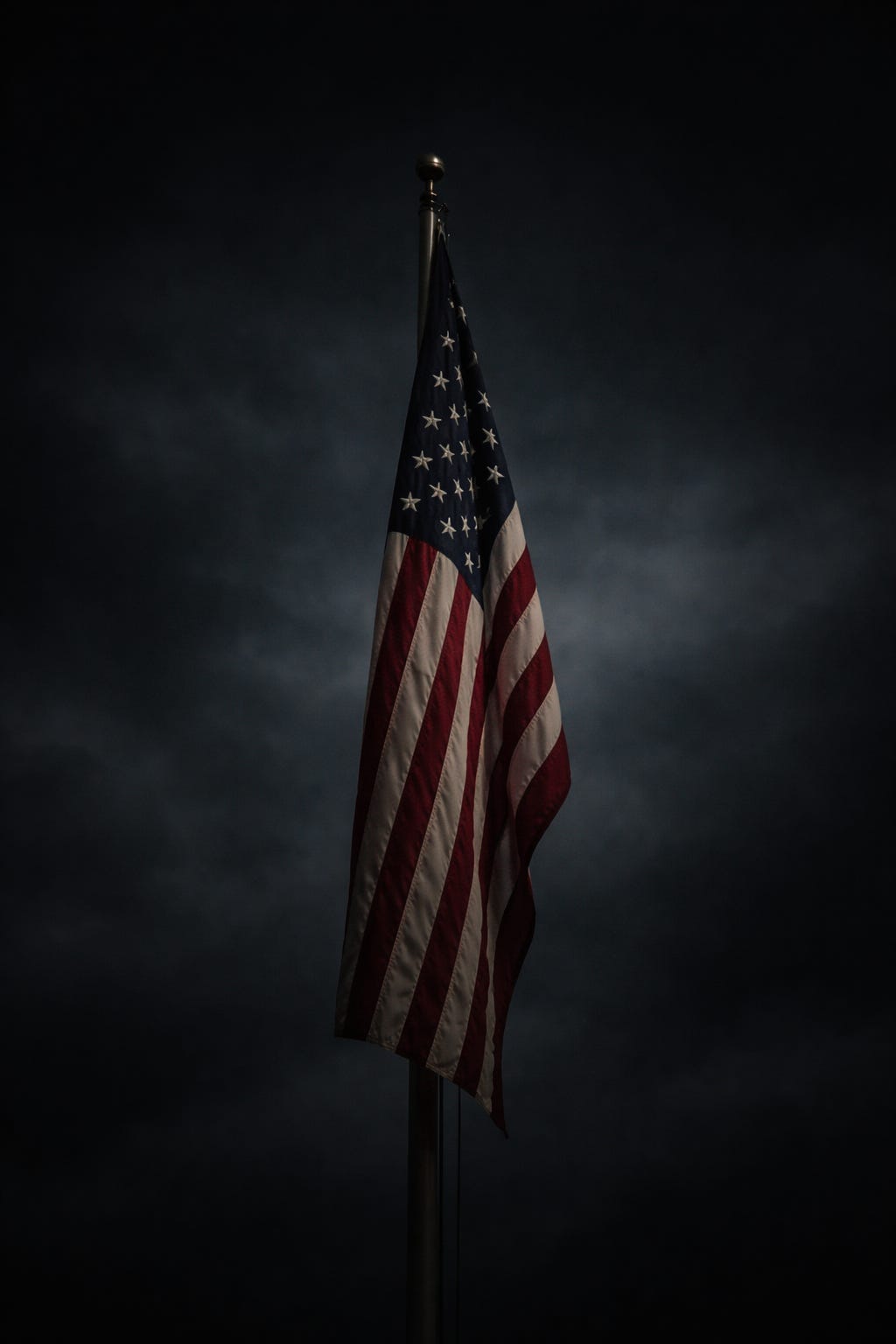
Look at the flag now. Truly look at it. See the cloth. See the threads. See the pattern that someone arranged to represent something larger than fabric.
The flag without the Constitution is nothing. Pretty colors arranged in pleasing patterns, signifying nothing beyond the skill of whoever operated the needle that produced it.
The Constitution without commitment is just literature. Beautiful words on aging paper, studied in classrooms and quoted by politicians who never intended to live them.
But put them together, completely together, lived out fully without exception, and you have something worth defending. Something worth the long, difficult task of becoming.
All men are created equal.
Not all citizens. Not all Americans. Not all Christians or English speakers or property owners or people who look like the founders or vote like the majority or worship like the majority or love like the majority.
All men. All people. All humanity.
The promise does not pause at borders. Justice does not require passports. Human dignity does not depend on documentation.
Either you are all free, or you are all still enslaved to systems that measure worth by wealth, that assign value by where you live, or determine destiny by the accidents of birth.
The choice is always before you.
In every election. In every policy decision. In every moment when you must decide whether your comfort matters more than others’ freedom, whether your security justifies others’ oppression, whether your advantages excuse others’ disadvantages.
Do you expand the promise or shrink from it?
Do you live closer to the ideals or further from them?
Do you choose the hard work of justice or the easy comfort of nationalism?
Madison chose to write words he knew his generation could not live. Ballou chose to die for words he knew were incomplete. Cavell chose to heal without regard for nationality. Evers chose to document truths that powerful people wanted buried. Manning chose to reveal crimes committed in democracy’s name.
They chose because someone had to choose. They carried forward because someone had to carry forward. They became foundation because democracy requires foundation.
Their burden becomes your inheritance. Their foundation becomes your responsibility. Their bridge-building becomes your choice.
You can worship the cloth and ignore the Constitution. You can salute the symbol while violating the promise. You can perform patriotism while practicing nationalism.
Or you can carry forward.
You can become foundation.
You can choose to be the bridge between the America that is and the America that could be.
All men are created equal.
The words wait for you. The promise waits for you. The Constitution waits for you to finally, finally have the courage to make it breathe.
Not through government buildings or court decisions or legislative victories alone. Through your willingness to sacrifice comfort for justice, safety for truth, convenience for conscience.
Through your refusal to let the promise die with you.
They spoke and then they died.
Virginia types words into the digital void, April 2019, knowing what speaking costs, knowing what silence costs more.
I am not suicidal. If something happens to me, investigate.
The words hang in the air like smoke. Like warning. Like prophecy waiting to unfold.
She dies April 2025. Suicide, they say. Nothing suspicious, they say. The investigation she requested never comes.
But the words remain. The demand remains.
The witness becomes the silenced. The silenced become the demand.
Carolyn sits in a courtroom, 2021, telling a jury what happened to her body when she was fourteen. Her voice breaking like glass against stone. Against power. Against the machinery that grinds children into profit and calls it business.
I had to block it out.
The blocking becomes the dying. Overdose, May 2023. Twenty-nine years old. The testimony survives her. The men who bought her body survive her.
Leigh never makes it to a courtroom. Dies in Florida, 2017. Another overdose. Another young woman who carried too much weight for too long. Another voice that spoke truth and was destroyed by the speaking.
No final words recorded. No last statement preserved. Just another body that carried what powerful men refused to carry until the carrying killed her.
You can trace this pattern across centuries. Across continents. Across every moment when someone decides to speak truth about power and power decides they must be silenced.
Madison wrote We the People knowing they would try to silence the promise.
Ballou died at Bull Run knowing they would try to silence the promise.
Cavell faced the firing squad knowing they would try to silence the promise.
Evers typed through Mississippi nights knowing they would try to silence the promise.
Manning sat in prison knowing they would try to silence the promise.
Knauss held the gate knowing they would try to silence the promise.
Virginia testified knowing they would try to silence her.
Carolyn testified knowing they would try to silence her.
Leigh died trying to speak what they silenced before she could say it.
The pattern is the same. The machinery grinds. The promise waits.
Somewhere in Washington, questions are being asked. Testimony is being given. Politicians sit in judgment of what they already know. What they have always known. What they will pretend to investigate while investigating nothing.
The questions echo through marble halls built by enslaved hands. Through chambers where Madison’s words hang like accusations.
Do you carry the promise forward or do you turn away?
Do you investigate what Virginia begged you to investigate?
Do you honor what Madison wrote, what Ballou died for, what Cavell believed, what Evers documented, what Manning revealed, what Knauss held?
Or do you let the machinery grind them all into silence?
The witness becomes the silenced. The silenced become the demand. The demand becomes the choice. The choice becomes the nation.
The cloth hangs before you. Still. Waiting.
The Constitution lies beneath it. Still. Waiting.
The promise breathes in the space between them. Still. Waiting.
Madison is dead but his words live.
Ballou is dead but his sacrifice lives.
Cavell is dead but her truth lives.
Evers is dead but his demand lives.
Manning lives but her question haunts.
Virginia is dead but her plea echoes.
Carolyn is dead but her testimony stands.
Leigh is dead but her silence speaks.
They all pass their burden to you. Today. This moment. This choice.
The promise carries forward through those who refuse to let it die.
The promise dies with those who choose to let it die.
Today you choose which you will be.
Today the nation chooses which it will be.
Today the flag chooses which it will mean.
For Madison, who wrote the words. For Ballou, who died for them. For Cavell, who lived them without borders. For Evers, who documented their betrayal. For Manning, who revealed their violation. For all the unnamed who carried forward what they could not finish.
We the People.
Wonderful, Joe! Of course, our president would consider every one of these people “losers and suckers.” I just hope we still have a country in three years.
A beautiful essay for our 250th anniversary as a nation. The promise has still not been kept. Thank you.